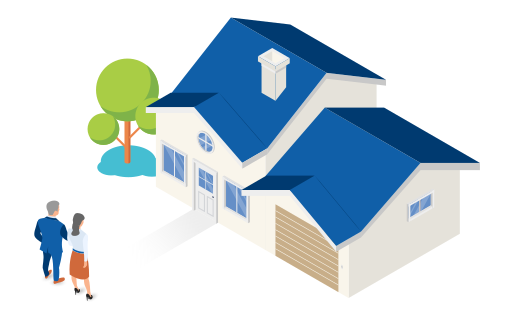

America's #1 Choice For Reverse Mortgages
Explore Your Reverse Mortgage Options
Access More of Your Home’s Equity – Get the Answers You Need

What is a Reverse Mortgage?
A reverse mortgage is a loan that allows you to convert home equity into cash with no monthly payments*.

How Do You Get Your Funds?
After closing, you can receive the funds as a lump sum, monthly payments, a line of credit, or a mix of these options.
Reverse Mortgage FAQ
Our FAQ covers the essentials; from eligibility to how the loan works and your repayment options, we provide everything you need to make an informed decision with confidence.
How do You Qualify?
You must be 62 or older, live in the home as your primary residence, have sufficient equity, and complete HUD-approved counseling.
Read Our Reviews
Mutual of Omaha holds an A+ rating from the Better Business Bureau, with over 100 years of experience. See our recent reviews.
How to Get Started
Getting started is easy. Our team will guide you every step of the way so you can move forward with confidence.


What is a Reverse Mortgage?
A reverse mortgage is a specialized home loan designed for homeowners aged 62 and older that allows you to convert part of your home’s equity into cash without selling your home or making monthly mortgage payments*. Unlike a traditional mortgage where you pay the lender, a reverse mortgage pays you. The funds can be received as a lump sum, monthly payments, a line of credit, or a combination of these options.
You Still Own Your Home
You remain the owner of your home and must continue paying property taxes, homeowners’ insurance, and maintenance costs.
Government-Backed Consumer Protections
The loan is insured by the Federal Housing Administration (FHA), which includes consumer protections such as limits on fees, mandatory counseling, and safeguards for non-borrowing spouses.
Loan Repayment Happens Later
The loan balance becomes due when you sell the home, move out permanently, or pass away. At that point, the home is usually sold to repay the loan, and any remaining equity goes to you or your heirs.
How to Qualify?
To qualify for a reverse mortgage, you must meet a few key requirements:
Age
You must be at least 62 years old.
Primary Residence
The home must be your primary residence.
Home Equity
You need sufficient equity in your home, typically 50% or more.
Property Type
Eligible properties include single-family homes, FHA-approved condos, and certain manufactured homes.
Financial Assessment
You must demonstrate the ability to pay ongoing costs like property taxes, homeowners insurance, and maintenance.
HUD Counseling
Completing a HUD-approved counseling session is mandatory before applying.
Meeting these criteria ensures you can access the benefits of a reverse mortgage while maintaining compliance with federal guidelines.
What’s the Process?
1
Check Eligibility
We begin with a brief review of your age, home type, and available equity to determine if a reverse mortgage is a suitable option for you.
2
Complete the Counseling Session
A required session with an independent, third-party counselor explains your options, protections, responsibilities, and safeguards – at no cost to you.
3
Submit Your Application
You reverse mortgage advisor walks you through the application, explains how much you may qualify for, and answers all of your questions.
4
Appraisal & Underwriting
Your home is appraised, and you application is carefully reviewed to ensure everything meets program guidelines before final approval.
5
Loan Closing
You sign the final documents and confirm how you’d like to receive.

6
Receive Your Funds
You sign the final documents and confirm your payout preferences, with funds available three days after closing.
Reverse Mortgage Disbursement Options

Lump Sum
Receive all your available funds at once—ideal for large expenses or paying off an existing mortgage.

Monthly Disbursements
Choose fixed monthly payments for a set period or for as long as you live in your home, providing steady income.

Line of Credit
Access funds as needed, with the added benefit that your available credit can grow over time.

Reverse Mortgage Safeguards
These safeguards are built into every FHA-insured reverse mortgage to protect your home, your finances, and your peace of mind.
Mandatory HUD Counseling
Ensures you fully understand the loan terms and make informed decisions before proceeding.
Non-Recourse Loan Protection
Guarantees you or your heirs will never owe
more than the home’s value when the loan is
repaid.
Non-Borrowing Spouse Protections
Provides security so eligible spouses can remain in the home even after the borrower passes away.
No Monthly Mortgage Payments*
Reduces financial stress by eliminating monthly mortgage obligations—just maintain taxes, insurance, and upkeep.
*Borrowers must continue to pay property taxes, homeowners insurance, and maintain the home. (Confirm exact disclaimer copy.)
Reverse Mortgage FAQ
What protections do borrowers have?
Protections include mandatory counseling, non-recourse terms (you’ll never owe more than your home’s value), and FHA insurance.
Do you lose ownership of your home?
No. You remain the owner and stay on the title. A reverse mortgage is simply a loan secured by your home.
How do payouts work?
You can choose a lump sum, monthly payments, a line of credit, or a combination—depending on your needs.
What are FHA requirements?
Borrowers must be 62 or older, live in the home as their primary residence, and meet financial assessment guidelines.
What happens if you move?
If you move out permanently, the loan becomes due. You or your heirs can sell the home or pay off the balance.
Will this affect Social Security or
Medicare?
No. Reverse mortgage proceeds generally do not impact Social Security or Medicare benefits.
Is a reverse mortgage safe?
Yes. Reverse mortgages are regulated by the FHA and include borrower protections to ensure safety and transparency.
What are the fees?
Fees typically include closing costs, mortgage insurance, and servicing fees. These can often be financed into the loan.
What happens when the borrower
passes away?
Heirs can repay the loan and keep the home or sell the property. They’ll never owe more than the home’s value.
How does a reverse mortgage
compare to a HELOC?
Unlike a HELOC, a reverse mortgage doesn’t require monthly payments and is designed for long-term retirement planning.
What types of homes qualify?
Single-family homes, FHA-approved condos, and some multi-unit properties (up to 4 units) may qualify.
Can you pay it off early?
Yes. There are no prepayment penalties—you can pay off the loan at any time.